Best guitar pedals for worship music
This is the one genre where the delay is the instrument and the drive pedal is a supporting act. Build it in that order.
Fret & Fuzz earns a commission when you buy through the links on this page. It costs you nothing and it does not decide what we rank. How we’re funded.
We have not played this gear. Every pick below is chosen from published manufacturer specifications and the arithmetic set out in how we research, which you can re-run yourself.

Build this board in the opposite order to a rock board: delay first, reverb second, compressor third, and a low-gain drive last. The signature sound of the style is a tempo-locked delay under a clean, compressed part — the drive pedal is a supporting act. Budget for a real power supply from the start, because a delay at 100 mA plus a reverb at 95 mA is already past what a daisy chain handles comfortably.
Most "pedals for worship" lists are a rock board with a reverb added. The requirements are genuinely different, and they follow from what the guitar is doing: playing underneath a vocal, in a room with a PA, for a set that has to run without stopping.
01The criteria, before any product
| Requirement | Why this style specifically | What to look for |
|---|---|---|
| Tap tempo on the delay | The dotted-eighth part fails if the time is even slightly off, and tempos change between songs | A dedicated tap switch, not a menu |
| Reverb that ducks or has pre-delay | You are running far more reverb than a rock board and still need the note attack | A Dynamic mode, or a front-panel pre-delay control |
| Repeat carryover | Sections change while the tail is still sounding | A Carryover switch, or spillover on bypass |
| Compression with blend | Clean arpeggios expose uneven picking; distortion is not there to hide it | A blend or mix control, not just sustain and level |
| Low-gain drive | Lifting a part, not changing the tone | A transparent or clean-blend circuit |
| Silent tuning | You are on a stage in front of people between every song | A pedal tuner with a mute, not a clip-on |
| Reliable switching | A failure mid-set is public | Relay or well-built mechanical switching; carry a spare cable |
Best pedals for worship music
| # | Product | Best for | Price |
|---|---|---|---|
| 01 | 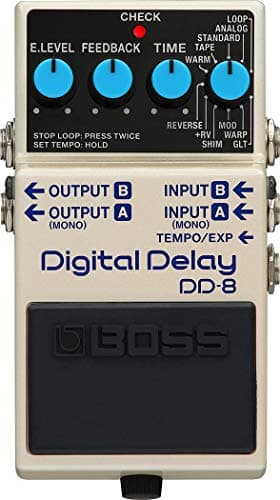 BOSS DD-8 Digital Delay Eleven modes and up to 10 seconds, with tap tempo — the dotted-eighth part is a delay setting, not a technique. | The pedal the whole style is built on | |
| 02 | 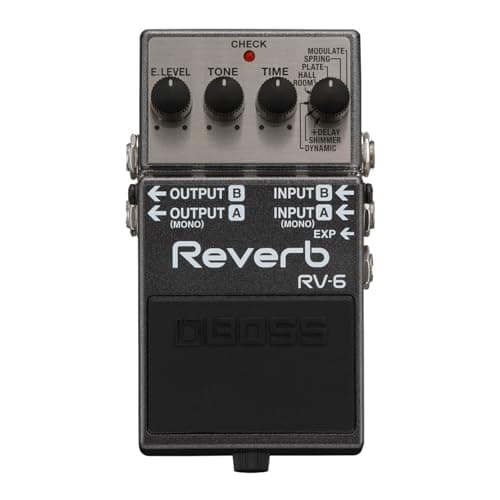 BOSS RV-6 Reverb Eight modes including Shimmer and Dynamic, with an expression input for swelling reverb with a foot. | The pad underneath everything | |
| 03 | 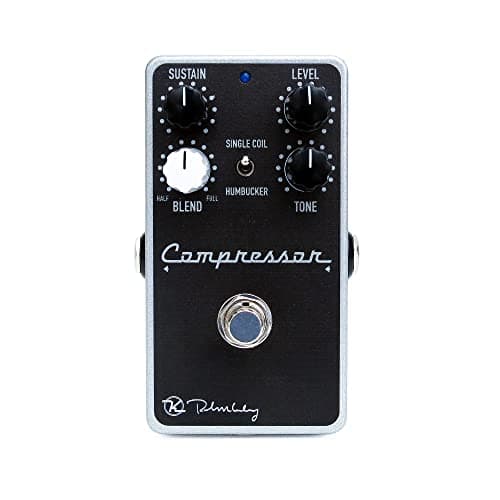 Keeley Compressor Plus The blend control keeps the pick attack while the compression holds a swelled note up. | Making clean parts sit still | $149.00 · Check price #ad How we’re funded · price as of October 20, 2026 |
| 04 | 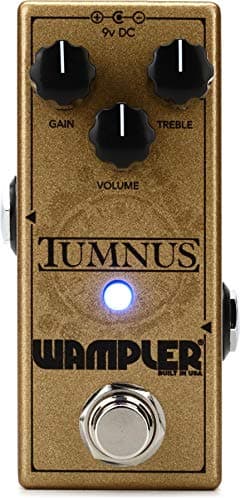 Wampler Tumnus A parallel clean path mixed with the clipped one, so the amp's low end survives the boost. | Lifting a part without changing the tone | $149.38 · Check price #ad How we’re funded · price as of October 20, 2026 |
| 05 | 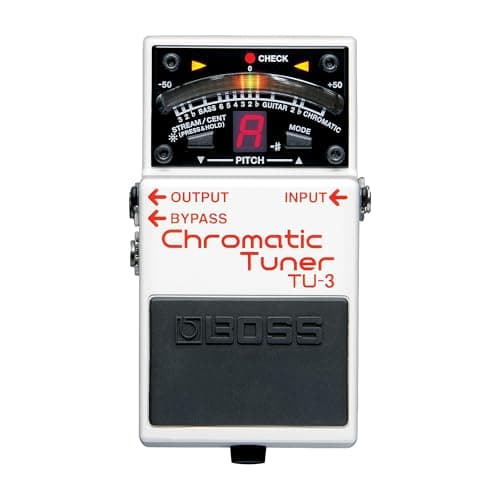 BOSS TU-3 Chromatic Tuner Mutes your output so you can retune silently between songs, and buffers a long cable run. | The pedal that saves you in public | |
| ! | 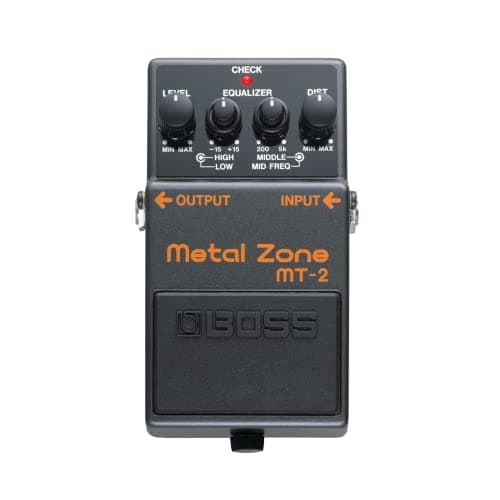 BOSS MT-2 Metal Zone A high-gain parametric-EQ distortion on a board that needs almost no gain at all. Skip this one — see why below | Not this sound, and it gets bought for it anyway | $109.99 · Check price #ad How we’re funded · price as of October 20, 2026 |
Rows link to the full write-up further down this page. Prices come from the live price layer only — where there is no live figure the button reads “Check price” rather than showing a remembered number.
03The delay setting, with the arithmetic
A dotted eighth is three quarters of a quarter note. A quarter note in milliseconds is 60,000 divided by the tempo, so a dotted eighth is 45,000 divided by the tempo. At 72 bpm that is 625 ms; at 120 bpm it is 375 ms; at 140 bpm it is 321 ms.
That is the whole calculation, and knowing it means you can set a delay correctly on any pedal, tap tempo or not. Delay time and tempo has the full table for quarter, eighth, dotted-eighth and sixteenth values.
BOSS DD-8 Digital Delay
The pedal the whole style is built on
The number100 mA, and tap tempo is the feature that makes it work in a set.
The signature sound of this style is a dotted-eighth delay repeat interleaving with a straight-eighth part so the two together produce a running pattern neither hand is playing. That effect stops working the moment the delay time is wrong by more than a few percent, which is why tap tempo is not optional here.
BOSS publishes eleven modes, up to 10 seconds of delay, true stereo I/O and a Carryover switch that lets repeats ring out past bypass instead of cutting off mid-phrase. Carryover matters more in worship than anywhere else, because sections change while the tail is still sounding.
The con is power and memory. 100 mA is the biggest single draw on most boards, and there are no saved presets — every mode change is a knob move. If your set needs three different delay sounds at three different tempos, you will be tap-tempoing between them rather than recalling them.
| Modes | 11 — Analog, Standard, Tape, Warm, Reverse, +RV, Shimmer, Mod, Warp, GLT, plus Loop |
|---|---|
| Maximum delay | Up to 10 seconds, with tap tempo |
| Controls | Mode, Time, Feedback, E.Level, Carryover switch, pedal switch |
| Current draw | 100 mA |
| Battery life | Approx. 3.5 hours on alkaline |
| I/O | True stereo in and out, with three selectable output modes |
| Weight | 440 g including battery |
| What it does not do | No adaptor included. At 100 mA it is not a pedal you daisy-chain casually, and the 3.5-hour battery figure means battery power is a backup, not a plan. |
Specs from BOSS DD-8 specifications. We have not used this unit.
BOSS RV-6 Reverb
The pad underneath everything
The number95 mA. Budget it alongside the delay, not instead of it.
Shimmer adds a pitch-shifted octave into the reverb tail, which is the specific sound behind most of the big ambient moments in this music. Our BOSS RV-6 review covers that pedal on its own terms. Dynamic ducks the reverb while you play and lets it bloom in the gaps, which is how you run far more reverb than usual without burying the vocal.
The expression pedal jack is the feature worth planning for. Swelling reverb level with a foot during a bridge is a control you cannot get from the front panel, and it replaces a volume-pedal swell technique that takes far longer to learn.
The cons: no preset memory, so mode changes are manual, and 95 mA on top of the delay's 100 mA is where a daisy chain stops being viable. The power arithmetic covers sizing the supply.
| Modes | 8 — Hall, Plate, Room, Spring, Modulate, +Delay, Shimmer, Dynamic |
|---|---|
| Controls | E.Level, Tone, Time, Mode, pedal switch |
| Current draw | 95 mA |
| Battery life | Approx. 3 hours on alkaline |
| I/O | Input A (mono) and B, Output A (mono) and B, expression jack |
| Weight | 450 g including battery |
| What it does not do | No adaptor included. 95 mA rules out a daisy chain shared with other digital pedals, and there is no way to save a setting — every mode change is a knob move. |
Specs from BOSS RV-6 specifications. We have not used this unit.
Keeley Compressor Plus
Making clean parts sit still
Worship guitar is mostly clean, mostly arpeggiated, and mostly underneath something else. All three of those are compressor conditions: uneven picking is audible when there is no distortion to hide it, and sustained notes need to hold their level while a pad builds.
The blend control is what makes it usable at settings that would flatten a two-knob compressor — the dry transient survives at full strength while the compressed signal fills in behind it. The Release switch matters too: Keeley tunes its two positions for single coils or humbuckers, because the same setting does not behave the same way on a hot humbucker as it does on a Strat.
The cons: no attack knob, and release is a two-position switch Keeley tunes for single coils or humbuckers rather than a continuous control. Keeley publishes a 10 mA draw but no impedance figures. And like any compressor it raises the noise floor, which matters more on the quiet, exposed clean parts this style is built on than it would under distortion.
| Controls | Sustain, Level, Blend and Tone knobs, plus a Release switch |
|---|---|
| Release switch | Two positions, which Keeley describes as tuned for single coils or humbuckers |
| Blend | Mixes the compressed signal against the dry signal for parallel compression |
| Current draw | 10 mA |
| Power | 9 V DC, center negative; Keeley also lists battery operation |
| Bypass | True bypass |
| Circuit | 100% analog |
| What it does not do | No attack knob, and release is a two-position switch set for pickup type rather than a continuous control — the blend knob is how you keep the transient, not a time constant. Keeley publishes the current draw but no impedance figures. |
Specs from Keeley Compressor Plus product page. We have not used this unit.
#ad How we’re funded · price as of October 20, 2026
Wampler Tumnus
Lifting a part without changing the tone
The number20 mA at 9 V, buffered bypass, no battery connection.
The drive requirement in this style is narrow: lift a chorus or a lead line above the clean rhythm without turning it into a rock tone. A Klon-style circuit does exactly that, because the clean path running alongside the clipping path means what you add sits on top of your amp rather than replacing it.
At low Gain settings it functions as a treble-forward clean boost, which is the setting most of these boards actually use. Wind it up and the clipped path takes over if you need more.
The cons: one tone control rather than an EQ section, no battery option at all, and it is buffered — which is fine here but worth knowing if you ever add a vintage fuzz. Klon clones covers the family.
| Controls | Level, Gain, Treble |
|---|---|
| Current draw | 20 mA at 9 V |
| Power | 9 V DC jack only — no battery connection |
| Bypass | 3PDT buffered bypass |
| Size | 1.5 x 3.5 x 1.5 in (38.1 x 88.9 x 38.1 mm), excluding knobs |
| What it does not do | One tone control, not a full EQ, and no battery option. It cannot make a dark amp bright on its own — it lifts treble and mids around what is already there. |
Specs from Wampler Tumnus product page. We have not used this unit.
#ad How we’re funded · price as of October 20, 2026
BOSS TU-3 Chromatic Tuner
The pedal that saves you in public
The number20 mA normally, 80 mA in High Brightness mode.
Every other pedal on this board is optional. A tuner that mutes is not, because this is a context where you are on a stage in front of people, often with an in-ear mix, and tuning audibly between songs is the one mistake everybody notices.
BOSS publishes +/- 1 cent accuracy across a C0 to C8 range with guitar, bass and flat-tuning modes. High Brightness mode exists because stage lighting in this setting is frequently brighter than a club's.
The con is the buffer and the current. High Brightness quadruples the draw from 20 mA to 80 mA, and the buffer is always in your path. On this board that is helpful; on a board with a vintage fuzz it is not.
| Tuning range | C0 (16.35 Hz) to C8 (4,186 Hz) |
|---|---|
| Accuracy | +/- 1 cent |
| Modes | Chromatic, Chromatic flat x2, Guitar, Guitar flat x2, Bass, Bass flat x3 |
| Bypass | Buffered bypass |
| Current draw | 20 mA; 80 mA with High Brightness mode on |
| Jacks | Output, Bypass, DC IN, DC OUT (powers other pedals) |
| Weight | 390 g including battery |
| What it does not do | +/- 1 cent is fine for a stage tuner and not enough for setting intonation — that is strobe territory. Turning on High Brightness quadruples the current draw, which matters on a shared supply. |
Specs from BOSS TU-3 specifications. We have not used this unit.
BOSS MT-2 Metal Zone
Not this sound, and it gets bought for it anyway
We are not picking this one, and it is not a bad pedal. The MT-2 has more tone-shaping than any other BOSS compact dirt pedal — three bands plus a sweepable mid frequency.
It is here because it is the pedal a guitarist buys when they think the answer to "my lead does not stand out" is more gain. In this style it almost never is. The parts sit under a vocal and a band, and a high-gain distortion makes them fight rather than lift.
What actually makes a worship lead line audible is a level lift with a small EQ change and more delay — which is the Tumnus above, or the delay already on the board. If you genuinely want a high-gain sound, the distortion roundup is the right page.
| Controls | Level, High, Low, Middle, Middle Freq (parametric), Dist |
|---|---|
| EQ | Three-band with a sweepable mid frequency — the most EQ on any BOSS compact dirt pedal |
| Power | 9 V battery or PSA-series adaptor |
| Electrical data | No current-draw or impedance figure is published for this pedal, so none is stated here. |
| What it does not do | No adaptor included. The factory mid-scooped setting is the one everybody hears and nobody should use — the parametric mid is the reason to own it, not an extra. |
Specs from BOSS MT-2 product page. We have not used this unit.
04The power budget for this board
Add the published figures: TU-3 at 20 mA, Tumnus at 20 mA, DD-8 at 100 mA, RV-6 at 95 mA and the Keeley Compressor Plus at 10 mA. That is 245 mA before headroom, and two of those pedals are digital.
A daisy chain sharing one ground between two digital pedals and three analog ones is the classic recipe for hum, and hum in a quiet room during a soft song is far more exposed than it would be in a rock set. This is a board that wants an isolated supply from day one — isolated vs daisy chain covers why, and the power supply roundup covers which.
05What this board does not need
- High gain. The parts sit under a vocal. A distortion pedal makes them compete rather than support.
- A second drive pedal. One low-gain lift covers the entire dynamic range this style asks for.
- Chorus, usually. Reverb and delay already provide width. Adding modulation on top mostly reduces clarity.
- An expensive amp. This is a clean-platform application — pedal platform amps covers what actually matters, and it is headroom rather than character.
Frequently asked questions
+ What pedals do I need for worship guitar?
+ What delay setting gives the dotted-eighth sound?
+ Do I need a volume pedal for swells?
+ How much reverb is too much?
Sources
Related on Fret & Fuzz
BOSS RV-6 review
Shimmer and Dynamic are the two modes worth paying for. 95 mA is the number that decides whether you can.
Top pick: BOSS RV-6 Reverb
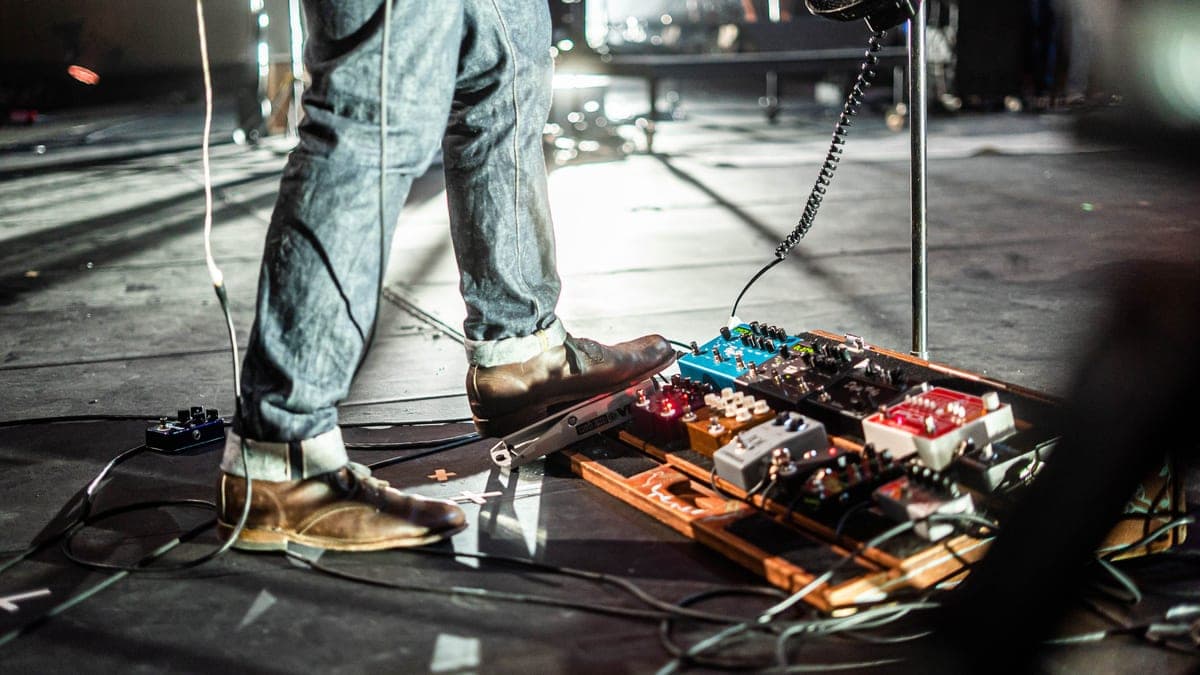
Best delay pedals
Maximum delay time and current draw settle most of this category. Four delays on their published figures.
Best Delay pick: BOSS DD-8 Digital Delay
Best reverb pedals
Check your amp first. If you do need a reverb pedal, one multi-mode unit covers every type — here is what the modes actually differ on.
Best Reverb pick: BOSS RV-6 Reverb
Delay time and tempo: the arithmetic
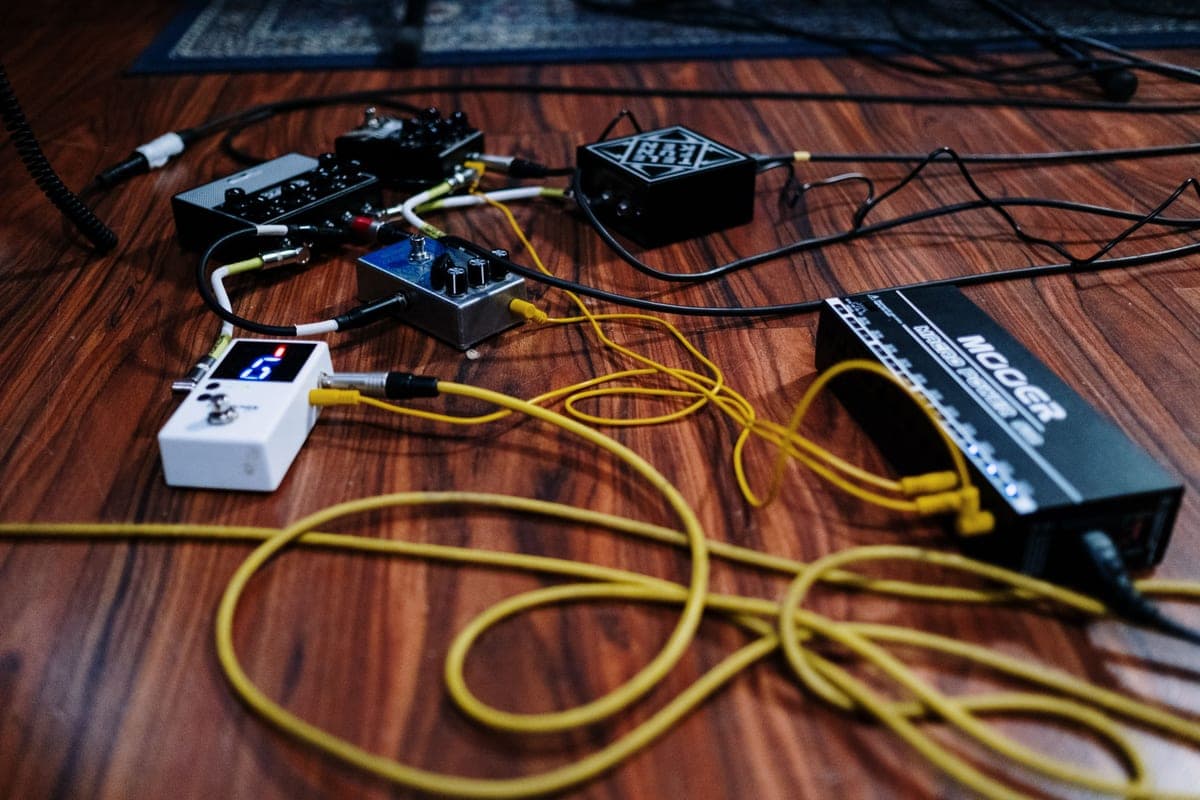
60,000 divided by the tempo. The full table for quarter, eighth, dotted-eighth and sixteenth notes.
Top pick: BOSS DD-8 Digital Delay
Best compressor pedals
Blend is the control that decides whether a compressor squashes or supports. Three compressors compared on what they do and do not have.
Best Compressor pick: Keeley Compressor Plus
#ad How we’re funded · price as of October 20, 2026
Pedalboard power requirements explained
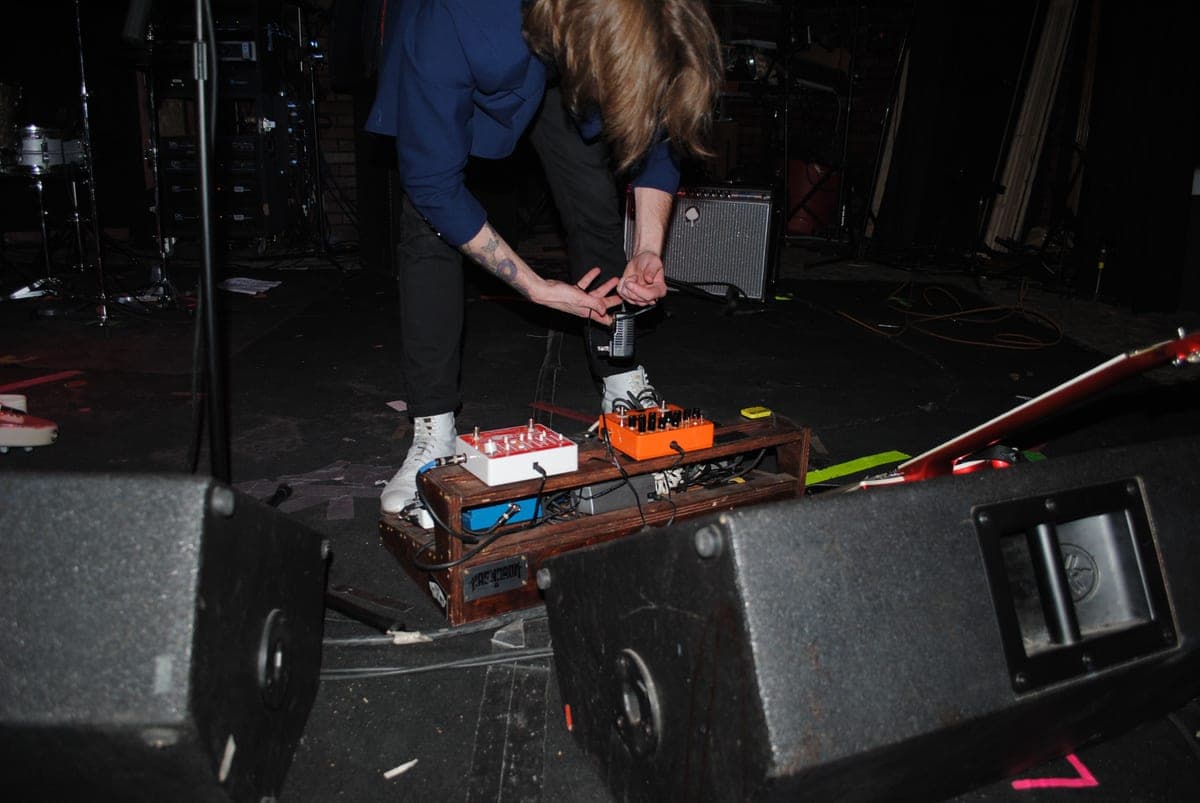
Two sums decide your power supply, and almost everyone only does the first. A worked example with real published figures.
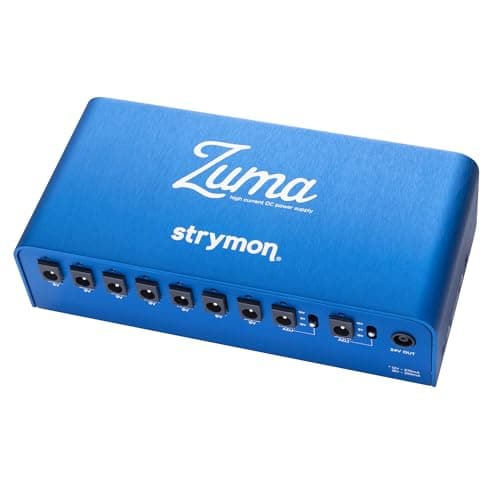
Top pick: Strymon Zuma
#ad How we’re funded · price as of October 20, 2026