Do you need a volume pedal?
Four jobs justify one. Everything else is a knob on your guitar that you already own and have already paid for.
Fret & Fuzz earns a commission when you buy through the links on this page. It costs you nothing and it does not decide what we rank. How we’re funded.
We have not played this gear. Every pick below is chosen from published manufacturer specifications and the arithmetic set out in how we research, which you can re-run yourself.
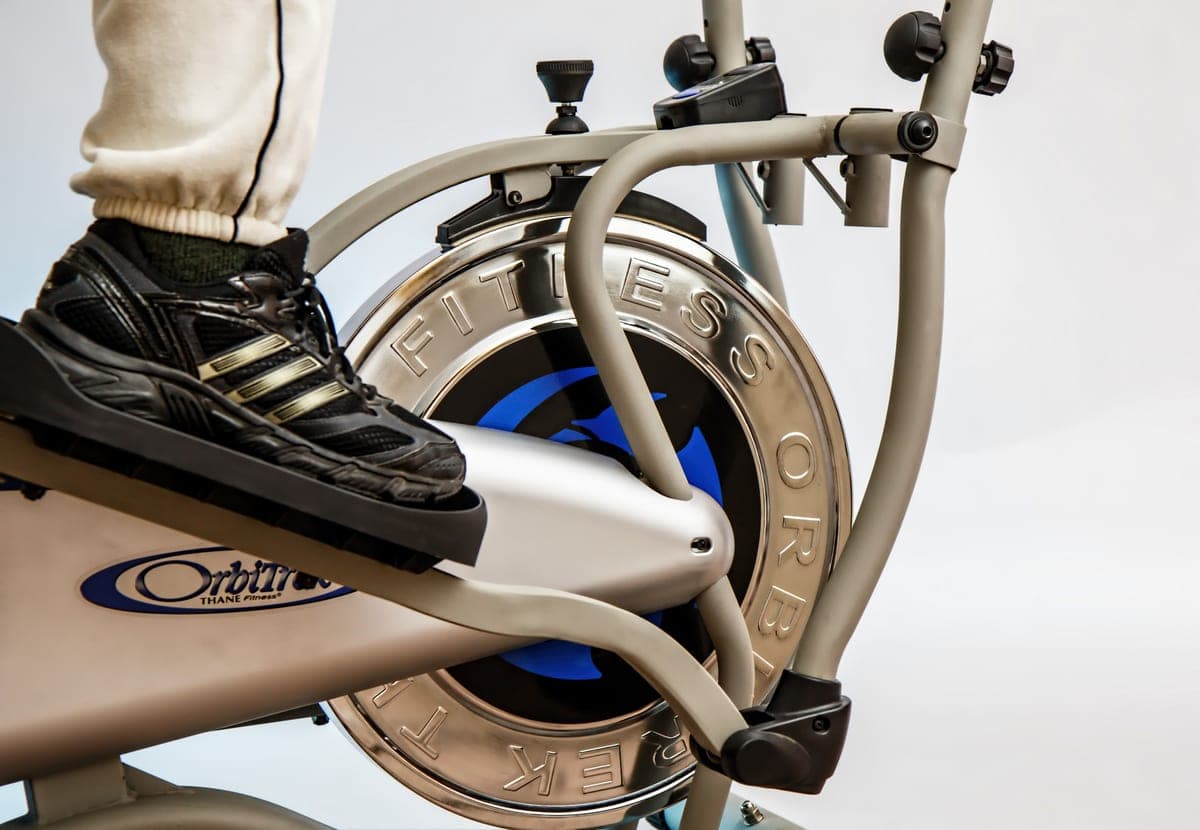
Probably not. A volume pedal earns its board space for four specific jobs — swells, hands-free fades, muting between songs, and riding the level of a solo while keeping both hands playing — and if you do none of them, your guitar's volume knob already does everything you need for free. If you do need one, the specification that decides which to buy is the potentiometer value, not the brand: a passive guitar straight into it wants 250 k (the Ernie Ball VP JR 250K), and anything with a buffer or active pickup ahead of it wants 25 k (the VP JR 25K). Getting that one number wrong is the most common volume pedal mistake there is.
We have not used these pedals, and this is not a tone review. What follows is what each maker publishes, the four jobs that justify the purchase, and the impedance question that decides which version you need. How we research sets out the method.
01The criteria, before any product
Volume pedals are mechanically simple and almost all the published information that matters fits in four questions.
- What potentiometer value, and voiced for what? 250 k for passive signals, 25 k for active or buffered ones. This is the only electrical specification most makers publish, and it is the one that matters.
- Is there a taper option? A volume pedal with one taper is a master volume. One with a switchable taper can also do swells, because the rate at which level rises across the treadle travel is the whole feel of a swell.
- Is there an expression output, and can you use it at the same time as the tuner output? On some pedals one jack does both and you choose. Read that before buying if you need both.
- Footprint. A full-size treadle takes roughly the space of two compact pedals. On a small board this decides the purchase more often than anything acoustic does.
| Pedal | Pot value / voiced for | Taper options | Expression out? |
|---|---|---|---|
| Ernie Ball VP JR 250K | 250 k — passive signals | Micro taper switch, two swell rates | No |
| Ernie Ball VP JR 25K | 25 k — active signals | Not listed for this model | No |
| Dunlop Volume (X) Mini | Not published | Not published | Yes — shared AUX jack with tuner out |
| Dunlop Cry Baby GCB95 | N/A — it is a filter, not a volume control | N/A | No |
Manufacturer figures only. Ernie Ball publishes the pot value and what it is voiced for; Dunlop publishes neither for the Volume (X) Mini, which is a real difference when the pot value is the specification that decides the purchase.
Volume pedals worth buying
| # | Product | Best for | Price |
|---|---|---|---|
| 01 | 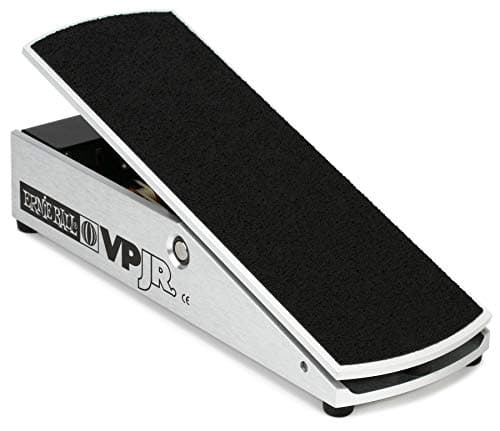 Ernie Ball VP JR 250K Volume Pedal The 250 k version is the one for passive pickups, and Ernie Ball says so on the product page. | A passive guitar straight into it, which is most players | $99.99 · Check price #ad How we’re funded · price as of November 2, 2026 |
| 02 | 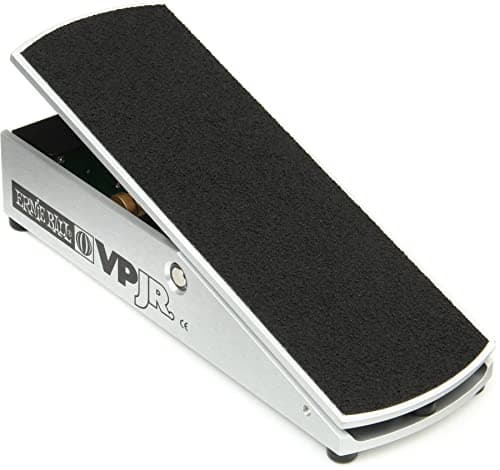 Ernie Ball VP JR 25K Volume Pedal The same pedal with a 25 k pot, which is the right value once your signal is no longer high-impedance. | Anything with a buffer or active electronics ahead of it | $99.95 · Check price #ad How we’re funded · price as of November 2, 2026 |
| 03 | 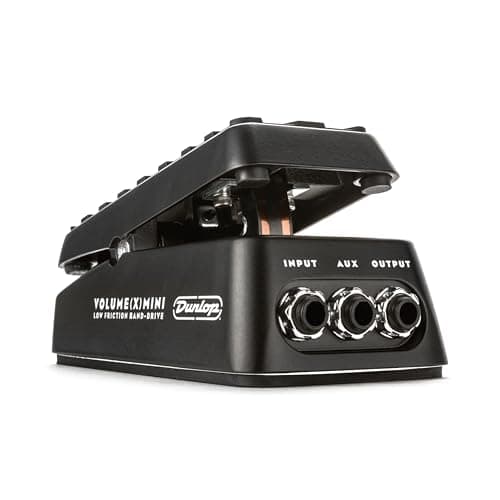 Dunlop Volume (X) Mini One AUX jack that switches between tuner out and expression out, in half the footprint of the full-size pedal. | A board where the same treadle has to do volume and expression duty | $149.99 · Check price #ad How we’re funded · price as of November 2, 2026 |
| ! | 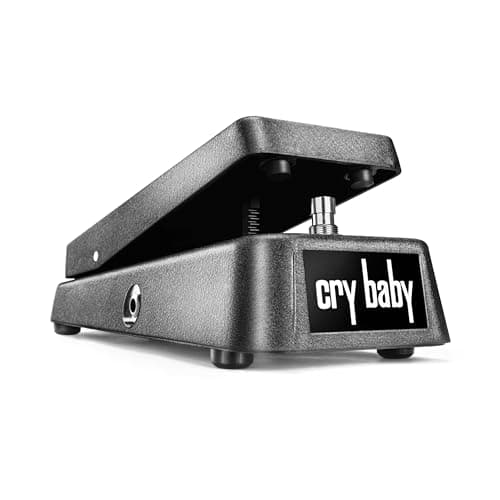 Dunlop Cry Baby Standard Wah GCB95 A filter sweep in a treadle, and not true bypass, so it is in your signal path when it is off. Skip this one — see why below | Nothing on this page — a wah treadle is not a volume control | $99.99 · Check price #ad How we’re funded · price as of November 2, 2026 |
Rows link to the full write-up further down this page. Prices come from the live price layer only — where there is no live figure the button reads “Check price” rather than showing a remembered number.
03The four jobs that justify one
A volume pedal is not a tone purchase. It buys you one thing — level control with your foot — and it is worth the board space only if you need your hands for something else at the same time.
- Swells. Picking a chord at zero and bringing it up with your foot removes the attack entirely, which turns a guitar into something closer to a bowed instrument. This is the job most people buy one for, and it is the job that needs a taper switch.
- Hands-free fades. Fading out the end of a song, or dropping under a vocal, while still playing. Your guitar's volume knob cannot do this without stopping one hand.
- Muting between songs. Heel-down is silence, which is useful for changing guitars, retuning or just not hissing at an audience. A tuner output makes this a silent-tuning solution as well.
- Riding a solo's level. Pushing a couple of decibels during a phrase, which a boost pedal does in one step and a treadle does continuously.
If your real problem is that your solos do not cut through a band, note that a volume pedal is a poor fix — a level increase alone is usually not enough, and the reason is frequency rather than loudness. Your solo disappears in a band — which pedal fixes it covers what actually works.
Ernie Ball VP JR 250K Volume Pedal
A passive guitar straight into it, which is most players
The number250 k potentiometer, voiced for passive signals, micro taper switch, 22 percent smaller footprint, fully passive.
This is the default recommendation, and the reason is one number. Ernie Ball states that the VP 250 k Jr is perfectly voiced for passive signals — a passive guitar, straight out of the jack, with no buffer in between. Get this part wrong and the pedal behaves badly in a way no amount of setup fixes, which is the whole point of the next entry.
The useful feature beyond the pot value is the micro taper switch, which Ernie Ball locates directly behind the input jack under the footplate and describes as giving two distinct volume swell rates. That is the difference between a pedal that is usable for swells and one that is only usable as a master volume. The housing is aircraft-grade aluminum, and the Jr is 22 percent smaller than the full-size pedal, which on a board is the deciding factor more often than tone is.
The cons are the honest limits of a passive pedal. It is fully passive, which means it loads your signal — put it after a buffer or in front of an active pickup and the sweep stops behaving. There is no minimum-volume knob and no gain stage; for those Ernie Ball sells the MVP, a different and more expensive pedal. There is no expression output, so it cannot control a parameter on a multi-effects unit. And Ernie Ball publishes no impedance or current figures at all for this pedal, because there is no circuit in it to publish figures for.
| Voiced for | Passive signals — Ernie Ball states the 250 k version is for passive electronics |
|---|---|
| Potentiometer | 250 k |
| Micro taper switch | Behind the input jack under the footplate; two distinct swell rates |
| Housing | Aircraft-grade aluminum |
| Footprint | 22 percent smaller than the full-size pedal |
| Power | None — fully passive |
| Electrical data | No current-draw or impedance figure is published for this pedal, so none is stated here. |
| What it does not do | Passive means it loads your signal: put a 250 k pedal after a buffer or an active pickup and the sweep stops behaving. There is no minimum-volume knob and no gain stage — for those Ernie Ball sells the MVP. No expression output, so it cannot control a parameter on a multi-effects unit. |
Specs from Ernie Ball volume pedal range. We have not used this unit.
#ad How we’re funded · price as of November 2, 2026
Ernie Ball VP JR 25K Volume Pedal
Anything with a buffer or active electronics ahead of it
The number25 k potentiometer, voiced for active signals, Vectran cable drive, 22 percent smaller footprint, fully passive.
This is the entry that catches people out, and it is the most useful thing on this page. Ernie Ball states that the VP 25 k pedal is perfectly voiced for active signals — and 'active signals' includes far more than active pickups. A buffered tuner at the front of your board, a buffered BOSS pedal left switched on, a multi-effects unit's output: all of them mean the signal reaching your volume pedal is low-impedance, and the correct pot value is 25 k, not 250 k.
Mechanically it is the same pedal: aircraft-grade aluminum, 22 percent smaller than full size, with Ernie Ball publishing a Vectran cable transmitting pedal travel to the 25 k potentiometer via a stainless steel spring.
Two cons, and the first is the important one. Put this straight out of a passive guitar and 25 k loads the pickup heavily — you lose top end and the guitar sounds dull before you have moved the treadle. It is the wrong pedal in that position, decisively. Ernie Ball also does not list the micro taper switch on this model, so the two swell rates are not a documented feature here. As with the 250 k: no minimum-volume knob, no gain, no expression output, and no published electrical data.
| Voiced for | Active signals — Ernie Ball states the 25 k version is for active electronics |
|---|---|
| Potentiometer | 25 k |
| Drive | Vectran cable to the 25 k potentiometer, stainless steel spring |
| Housing | Aircraft-grade aluminum |
| Footprint | 22 percent smaller than the full-size pedal |
| Power | None — fully passive |
| Electrical data | No current-draw or impedance figure is published for this pedal, so none is stated here. |
| What it does not do | This is the wrong pedal straight out of a passive guitar — 25 k loads a passive pickup heavily and you lose top end. Ernie Ball does not list the micro taper switch on this model. No minimum-volume knob, no gain, no expression output. |
Specs from Ernie Ball volume pedal range. We have not used this unit.
#ad How we’re funded · price as of November 2, 2026
Dunlop Volume (X) Mini
A board where the same treadle has to do volume and expression duty
The numberDVP4. AUX jack switchable between tuner and expression, internal minimum-level pot, half the size of the DVP3.
The case for this one is the jack. Dunlop publishes an AUX output that combines tuner and expression functionality into one jack, selected by a switch inside the pedal, plus an internal pot that sets the minimum level of the controlled parameter. So the same treadle can be a volume pedal today and a wah or delay-mix controller for a multi-effects unit tomorrow.
It is also the smallest pedal here — Dunlop states it is half the size of the DVP3 — with a lightweight aluminum chassis, an aggressive non-slip tread and Dunlop's patented Low Friction Band-Drive, which is the mechanism that determines how a treadle feels under a foot.
The cons are specific and two of them are information gaps. The AUX jack is one jack, not two: set it to expression and you lose the tuner output, and the other way round — so the 'silent tuning in the heel-down position' trick and expression control are mutually exclusive on this pedal. More awkwardly, Dunlop publishes no dimensions, no weight, no potentiometer value and no taper for it. If you need to know what it does to a passive signal, that figure does not exist publicly — which is exactly the question the Ernie Ball pedals answer on their product page.
| Model | DVP4 |
|---|---|
| AUX jack | One jack doing both tuner out and expression out, selected by an internal switch |
| Minimum level | Internal pot sets the floor of the controlled parameter |
| Drive | Dunlop's Low Friction Band-Drive |
| Chassis | Lightweight aluminum with a non-slip tread |
| Size | Dunlop states only that it is half the size of the DVP3 |
| Electrical data | No current-draw or impedance figure is published for this pedal, so none is stated here. |
| What it does not do | The AUX jack is one jack, not two: set it to expression and you lose the tuner output, and the other way round. Dunlop publishes no dimensions, no weight, no pot value and no taper for this pedal — if you need to know what it does to a passive signal, that figure does not exist publicly. |
Specs from Dunlop Volume (X) Mini (DVP4) product page. We have not used this unit.
#ad How we’re funded · price as of November 2, 2026
Dunlop Cry Baby Standard Wah GCB95
Nothing on this page — a wah treadle is not a volume control
The numberRed Fasel inductor, treadle-actuated toe switch, not true bypass, 9 V battery or adapter (not included).
Included because the question gets asked: can a wah double as a volume pedal? No, and the reason is what the pedal does rather than how it is built. A wah is a resonant filter whose center frequency moves with the treadle — Dunlop publishes a red Fasel inductor as the part that defines it. Rocking it changes which frequencies are emphasized, not how loud you are. Heel-down on a wah is a dark, muffled tone, not silence.
There is a second reason not to try. Dunlop's own published note is that the GCB95 is not true bypass, so it is in your signal path when it is off — which matters in front of a vintage fuzz, and matters generally if you were hoping to leave a treadle on the board for occasional use.
If you want one treadle to do both jobs, the Volume (X) Mini above with its switchable AUX jack is the nearer answer, or a multi-effects unit with a built-in expression pedal. If you want a wah, buy a wah: Best wah pedals covers that purchase, including the bypass question this pedal raises.
| Inductor | Red Fasel inductor |
|---|---|
| Format | Full-size rocker treadle in a die-cast housing |
| Switching | Treadle-actuated switch at the toe end |
| Power | 9 V battery, Dunlop ECB003 adapter, or a DC Brick / Iso-Brick supply (not included) |
| Electrical data | No current-draw or impedance figure is published for this pedal, so none is stated here. |
| What it does not do | It is not true bypass, so it is in your signal path when it is off — which matters in front of a vintage fuzz. No supply included, and the full-size housing takes roughly the footprint of two compact pedals. |
Specs from Dunlop Cry Baby Standard Wah (GCB95) product page. We have not used this unit.
04The impedance question, which is the whole purchase
This is the part that goes wrong, and it goes wrong quietly: the pedal works, nothing is broken, and the guitar simply sounds worse than it did.
A passive volume pedal is a potentiometer in your signal path and nothing else. Its resistance is part of the circuit your pickup is driving. A passive pickup is a high-impedance source and wants to see a high load — around 250 k or more — so a 250 k pot sits across it harmlessly and the treadle sweeps evenly. Put a 25 k pot there instead and you have loaded the pickup with a tenth of what it wants: the top end drops, the guitar dulls, and the sweep becomes uneven.
Now reverse it. Once your signal has passed through any buffer — a buffered tuner, a BOSS compact left switched on, a multi-effects output — it is a low-impedance line signal and the loading problem disappears. In that position a 250 k pot gives a sweep that does most of its work in the last third of the travel, which feels wrong under a foot, and the 25 k version is the correct one.
So the answer depends on where in the chain the pedal sits, not on what guitar you own. Before anything: 250 k. After a buffer: 25 k. If you are not sure whether your board has a buffer in it, Buffer vs true bypass is the page that settles it.
05Where it goes, and the one case with a real answer
Most pedal-order questions are matters of taste. This one has a technically correct answer for one specific use.
For swells, put it after your delay and reverb. The tail of a repeat should continue while you bring the next note up, which only happens if the volume pedal is before the time-based pedals — no, precisely the reverse: it has to be BEFORE them, so that turning down stops new signal entering the delay while the existing repeats ring out. Put it after them and heel-down kills the tails too, which destroys the effect you bought it for.
For a master volume, put it last, where it controls everything including the reverb tails, because that is what a master volume is for.
For controlling how hard the amp is driven, put it in the amp's effects loop instead, where it attenuates the preamp's output without changing how much signal the preamp receives. Which pedals go in the amp's effects loop? covers that placement and the level mismatch to watch for.
06Who should not buy one
Anyone whose answer to all four jobs above is no. This is the most skippable pedal category on this site, and the guitar's own volume knob is a genuinely good control that most players under-use.
Anyone who already owns a multi-effects unit with a built-in expression pedal — the POD Go and GX-100 both publish one, and assigning it to volume costs nothing.
And anyone on a small board. A full-size treadle takes the footprint of two compact pedals, and swapping a delay or a tuner out to make room for a volume pedal is a trade very few players are glad they made.
Frequently asked questions
+ Do you need a volume pedal?
+ What is the difference between a 250K and a 25K volume pedal?
+ Is a volume pedal the same as an expression pedal?
+ Where should a volume pedal go in the chain?
+ Can I use a wah pedal as a volume pedal?
+ Can a volume pedal control my amp's gain?
Sources
Related on Fret & Fuzz

Your solo disappears in a band — which pedal fixes it
Three different faults produce the same complaint. The diagnostic table first, then the pedal that fixes yours.
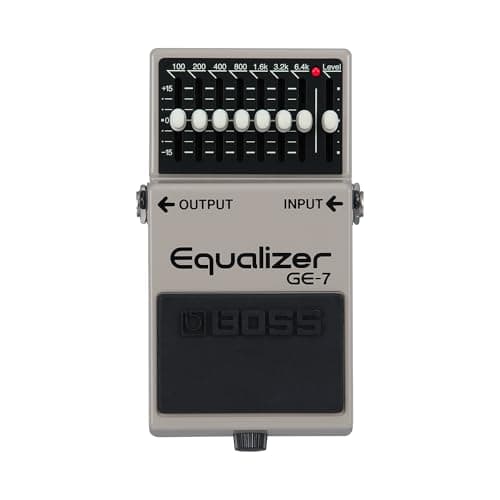
Top pick: BOSS GE-7 Equalizer
#ad How we’re funded · price as of November 2, 2026
Pedal order: what changes and what does not
Two placements are load-bearing and the rest are preference. Which is which, and the impedance figures behind the first one.
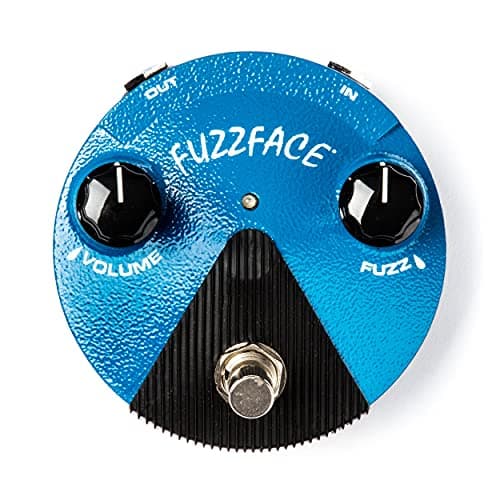
Top pick: Dunlop Fuzz Face Mini Silicon
#ad How we’re funded · price as of November 2, 2026
Best wah pedals
Inductor, bypass and treadle length are what separate wahs — plus the fuzz problem that decides the purchase.
Best Wah pick: Dunlop Cry Baby Standard Wah GCB95
#ad How we’re funded · price as of November 2, 2026
Which pedals go in the amp's effects loop?
Processors in the loop, generators in front. The figure that decides it is nominal operating level.
Top pick: BOSS DD-8 Digital Delay