Best fuzz pedals for doom and stoner rock
The genre where a chord has to hang in the air for four bars, which is a sustain problem rather than a gain problem.
Fret & Fuzz earns a commission when you buy through the links on this page. It costs you nothing and it does not decide what we rank. How we’re funded.
We have not played this gear. Every pick below is chosen from published manufacturer specifications and the arithmetic set out in how we research, which you can re-run yourself.

Doom and stoner riffs need sustain and low end that survives a downtuned chord, which is a circuit-topology question rather than a gain question. Cascaded clipping stages re-clip a note as it decays, so it hangs instead of dying — that is what a Big Muff does and what a single-stage distortion cannot. Buy a Green Russian Big Muff for the canonical sound, the Op-Amp version if you need to cut through a band, and add a RAT when chords need to stay legible.
This is a genre where the usual advice — more gain — is actively wrong, and where the specification that decides everything is one most product pages do not put in a headline.
01The criteria, before any product
| Criterion | Why doom specifically | What to look for |
|---|---|---|
| Cascaded clipping stages | Re-clips the note as it decays, so a chord hangs for bars | A published multi-stage topology — the Muff family |
| Low-end retention | A downtuned riff has its fundamental well below standard pitch | A circuit with bass emphasis, or no aggressive bass cut |
| Midrange survival | Scooped fuzz is enormous alone and inaudible in a band | A defeatable tone stack, or an EQ after it |
| Chord definition | Slow tempos leave every note in a voicing exposed | Hard clipping keeps notes separate; a Muff blurs them |
| Input impedance | Low-impedance inputs make placement matter | Published figures — 55 k ohm on the Op-Amp Muff |
| Interaction with the amp | This style drives the amp hard as well as the pedal | A pedal that stacks rather than one that dominates |
Best fuzz for doom and stoner rock
| # | Product | Best for | Price |
|---|---|---|---|
| 01 | 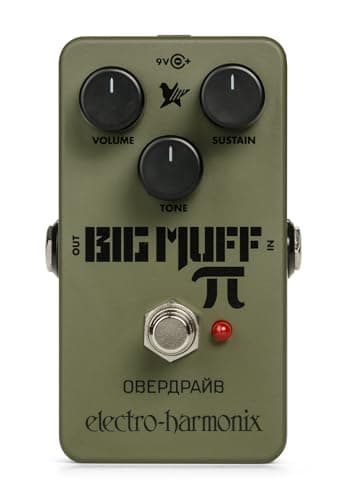 Electro-Harmonix Green Russian Big Muff EHX's reissue of the mid-1990s Russian circuit, with more low end than the standard Big Muff. | The sound the whole genre is built on | $108.90 · Check price #ad How we’re funded · price as of September 13, 2026 |
| 02 | 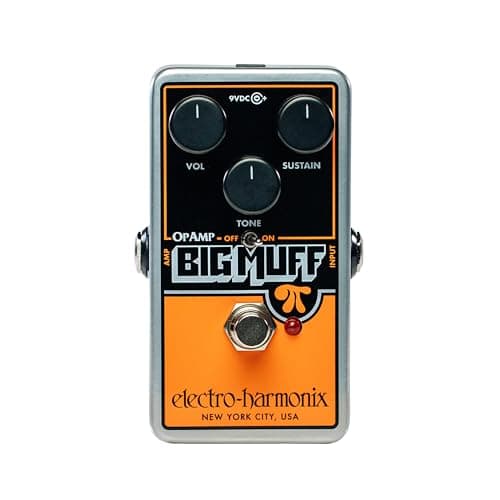 Electro-Harmonix Op-Amp Big Muff Pi Op-amp clipping rather than four transistors, plus a Tone Bypass switch that removes the scoop entirely. | Cutting through when the Russian gets buried | $96.20 · Check price #ad How we’re funded · price as of September 13, 2026 |
| 03 | 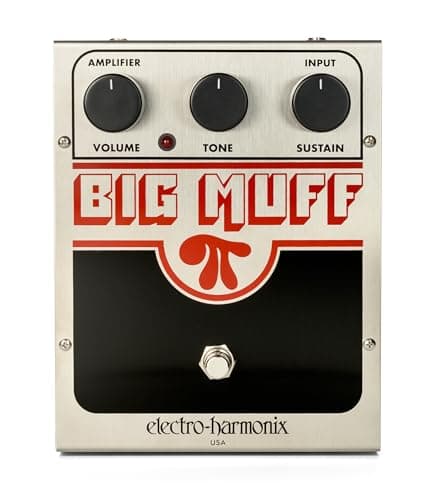 Electro-Harmonix Big Muff Pi Four transistors with two cascaded clipping stages — the circuit everything above is a variation on. | The reference point, if you are buying your first | $101.60 · Check price #ad How we’re funded · price as of September 13, 2026 |
| 04 | 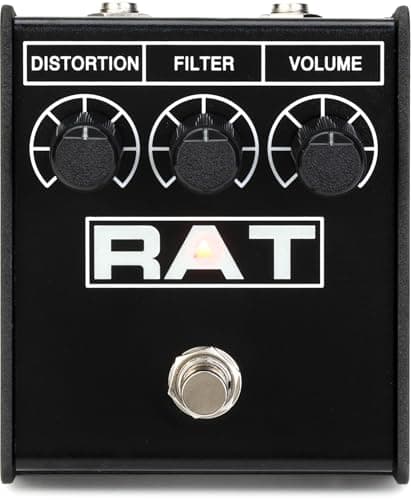 Pro Co RAT 2 Hard clipping with a genuine filter control, so chords keep definition a Muff blurs away. | The one that stays legible under a slow riff | $87.39 · Check price #ad How we’re funded · price as of September 13, 2026 |
| ! | 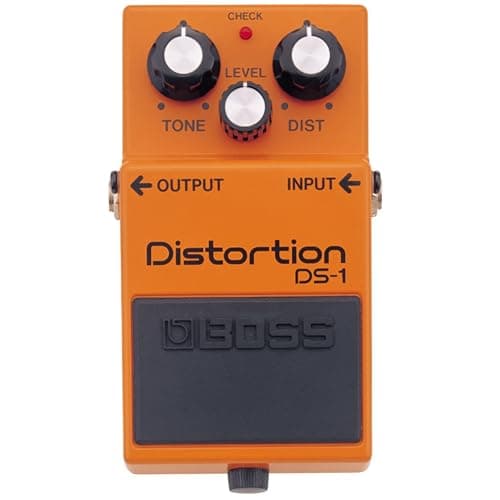 BOSS DS-1 Distortion One hard-clipping stage with a scooping tone control — no sustain, and less midrange than you already had. Skip this one — see why below | Not this genre, and the reason is instructive | $69.99 · Check price #ad How we’re funded · price as of September 13, 2026 |
Rows link to the full write-up further down this page. Prices come from the live price layer only — where there is no live figure the button reads “Check price” rather than showing a remembered number.
03Why cascaded clipping is the whole answer
A single-stage distortion clips the signal once. As the note decays its amplitude falls below the clipping threshold, the distortion stops, and you hear the note die — naturally and fairly quickly.
A cascaded design clips, amplifies, and clips again. As the note decays, the second stage is still being driven hard by the output of the first, so the signal keeps hitting the clipping threshold long after an unclipped note would have faded. The audible result is a chord that sustains for bars rather than beats, and it is a topology difference rather than a gain setting.
Electro-Harmonix Green Russian Big Muff
The sound the whole genre is built on
If one pedal defines this style it is a Russian-era Big Muff, and EHX publishes this as a reissue of that mid-1990s circuit with more low end than the standard version. The extra weight below the fundamental is exactly what a downtuned riff needs, and it is the reason this variant is the one people hunt for.
Two cascaded clipping stages re-clip the note as it decays, which is why a chord hangs rather than dying — the defining requirement of the genre and something no single-stage distortion does.
The cons are the same low end, from the other side. EHX is explicit that the extra bass is the point and the problem: on a bass-heavy amp it turns to mush, and there is no bass control to walk it back. Like every Muff there is a fixed mid scoop and no cleanup on the volume knob, and EHX publishes no electrical data for it.
| Controls | Volume, Tone, Sustain |
|---|---|
| Voicing | EHX describes this as a reissue of the mid-1990s Russian-made circuit, with more low end and less upper-mid bite than the US version |
| Power | 9 V battery or a 9 V DC center-negative supply |
| Electrical data | No current-draw or impedance figure is published for this pedal, so none is stated here. |
| What it does not do | The extra low end is the point and the problem: on a bass-heavy amp it turns to mush, and there is no bass control to walk it back. |
Specs from Electro-Harmonix Green Russian Big Muff product page. We have not used this unit.
#ad How we’re funded · price as of September 13, 2026
Electro-Harmonix Op-Amp Big Muff Pi
Cutting through when the Russian gets buried
The numberApproximately 5 mA at 9 V; 55 k ohm input impedance.
The harder, more compressed member of the family, and the one with the answer to the Muff's biggest weakness. The Tone Bypass switch takes the passive tone stack out of the circuit altogether, which removes the fixed mid scoop that makes every other Muff disappear under a band.
For a two-guitar band, or any situation where the Russian above sounds enormous in the room and vanishes in the mix, this is the fix that does not require a second pedal.
The cons: EHX publishes a 55 k ohm input impedance, the lowest in the Muff family, which means what sits in front of it genuinely matters — a long cable or a passive volume pedal directly before it will change the sound. There is no germanium warmth here either; this is the harsher version, deliberately.
| Controls | Volume, Tone, Sustain, Tone Bypass switch |
|---|---|
| Input impedance | 55 k ohm |
| Current draw | Approximately 5 mA at 9 V DC |
| Circuit | Op-amp clipping rather than the four-transistor topology of the standard Big Muff |
| What it does not do | The 55 k ohm input impedance is the lowest of the Muff family, so what sits in front of it matters more than usual. There is no germanium warmth here — this is the harder, more compressed version of the sound. |
Specs from Electro-Harmonix Op-Amp Big Muff Pi product page. We have not used this unit.
#ad How we’re funded · price as of September 13, 2026
Electro-Harmonix Big Muff Pi
The reference point, if you are buying your first
The numberApproximately 3 mA at 9 V — the lowest draw on this page.
Buy this one if you have never owned a Muff, because it is the version every other version is described against and it is the cheapest way to find out whether the family suits you. The four-transistor topology with two cascaded clipping stages between a boost stage and an output stage is the whole architecture the genre runs on.
At roughly 3 mA it is also the least demanding pedal on any supply here by a wide margin.
The cons: the tone stack has a fixed mid scoop with no way to defeat it — this is the version without the Op-Amp's Tone Bypass — and there is no gain-cleanup behavior at all, so rolling your guitar volume down mostly just gets quieter rather than cleaner. Big Muff versions covers which variant does what.
| Controls | Volume, Tone, Sustain |
|---|---|
| Current draw | Approximately 3 mA at 9 V DC |
| Power | 9 V battery or a 9 V DC center-negative supply |
| Circuit | Four-transistor design with two cascaded clipping stages between a boost stage and a recovery stage |
| What it does not do | The tone stack has a fixed mid scoop with no way to defeat it, and there is no gain-cleanup behavior — rolling your guitar volume down mostly just gets quieter, not cleaner. |
Specs from Electro-Harmonix Big Muff Pi manual (PDF). We have not used this unit.
#ad How we’re funded · price as of September 13, 2026
Pro Co RAT 2
The one that stays legible under a slow riff
Not a fuzz, and on this page deliberately. The tempo in this genre is slow and the chords ring, which means every note in a voicing is audible for a long time — and a Muff turns a chord into one sustained mass. A RAT clips hard and keeps the individual notes legible, which is why it turns up on a lot of these records alongside a Muff rather than instead of one.
Its Filter control is a genuine low-pass rather than a scooping tone knob, so you can take the harshness off without losing the mids that keep you audible.
The cons: it will not sustain the way a cascaded-clipping circuit does, so a four-bar ringing chord is not what it is for. Pro Co publishes essentially no electrical data. And it is the least characterful choice here — nobody buys a RAT for a sound nobody else has.
| Controls | Distortion, Filter, Volume |
|---|---|
| Filter control | Runs backwards from a normal tone knob — turning it up removes treble |
| Power | 9 V battery or a 9 V DC supply (adapter sold separately) |
| Enclosure | Steel, with the battery compartment accessible without tools |
| Electrical data | No current-draw or impedance figure is published for this pedal, so none is stated here. |
| What it does not do | No power supply included. There is no clean-boost side to it — at low Distortion the RAT is still a distortion, and the Filter control confuses everyone exactly once. |
Specs from Pro Co RAT 2 product page. We have not used this unit.
#ad How we’re funded · price as of September 13, 2026
BOSS DS-1 Distortion
Not this genre, and the reason is instructive
We are not picking this one, and it is a good pedal that earns its place on other pages here.
Two reasons it is wrong for doom specifically. It has a single clipping stage, so a note decays naturally rather than being re-clipped on the way down — the long ringing sustain the genre is built on simply is not available from this circuit at any setting. And its single Tone knob scoops mids as it brightens, so the setting that sounds aggressive alone is the setting that vanishes under a band.
It gets bought for this because it is cheap, famous and sounds angry through headphones. Big Muff vs DS-1 puts the two side by side on exactly this distinction, and best distortion pedals covers what the DS-1 is genuinely good at.
| Controls | Tone, Level, Dist, pedal switch |
|---|---|
| Input impedance | 1 M ohm |
| Output impedance | 1 k ohm |
| Current draw | 10 mA |
| Power | 9 V battery (6F22 / 6LR61) or PSA-series adaptor |
| Size / weight | 73 x 129 x 59 mm, 360 g |
| What it does not do | No adaptor included, no true bypass. The single Tone knob scoops as it brightens, so a DS-1 into an already-scooped amp is the classic recipe for disappearing in a band mix. |
Specs from BOSS DS-1 specifications. We have not used this unit.
04The mid scoop problem, and the fix
Every standard Big Muff has a fixed mid scoop built into its passive tone stack, and the Tone knob moves the balance between a low-pass and a high-pass filter without removing the dip between them. There is no flat setting.
Alone, that scoop sounds enormous. In a band it is why the guitar disappears the moment a bass guitar occupies the low end and a vocal occupies the highs. Two fixes exist: the Op-Amp version's Tone Bypass switch, which removes the stack entirely, or an EQ pedal after the fuzz with the mids brought up. The second costs a board slot and works on any version.
05Tuning, and what it does to the pedal
Drop C or lower puts your lowest fundamental well below where these circuits were voiced, and the practical consequence is flub — the low string loses definition before anything else does. That is usually a speaker and amp problem as much as a pedal one.
Two things help. Rolling some bass off *before* the fuzz tightens it, which is the same reason a Tube Screamer tightens a loose amp. And heavier strings at low tension keep the fundamental defined in a way light strings tuned down cannot. Best amps for metal covers the low-end control side of the same problem.
Frequently asked questions
+ What fuzz pedal is best for doom metal?
+ Why does my fuzz disappear when the band starts?
+ Do I need more gain for doom riffs?
+ Should I use a fuzz or a distortion for stoner rock?
Sources
Related on Fret & Fuzz
Best fuzz pedals
Input impedance predicts your fuzz experience better than any adjective. Five fuzzes compared on the published figures.
Best Fuzz pick: Electro-Harmonix Big Muff Pi
#ad How we’re funded · price as of September 13, 2026
Big Muff versions compared
Four versions, four different circuits. Published impedance and current draw for each, and which one to buy.
Top pick: Electro-Harmonix Big Muff Pi
#ad How we’re funded · price as of September 13, 2026
Big Muff vs RAT
Cascaded clipping versus one hard-clipping stage — sustain against articulation, and which survives a mix.
Top pick: Pro Co RAT 2
#ad How we’re funded · price as of September 13, 2026

Best guitar pedals for metal
The gate matters more than the distortion pedal. Picks judged on gate topology, EQ resolution and published current draw.
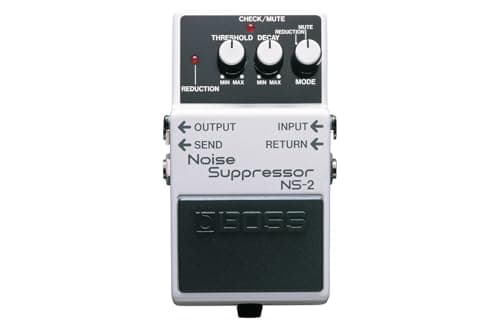
Best for Metal pick: BOSS NS-2 Noise Suppressor
#ad How we’re funded · price as of September 13, 2026
Best EQ pedals
Bands, decibel range and supply voltage. Three EQs compared, plus the 18 V requirement that strands power plans.
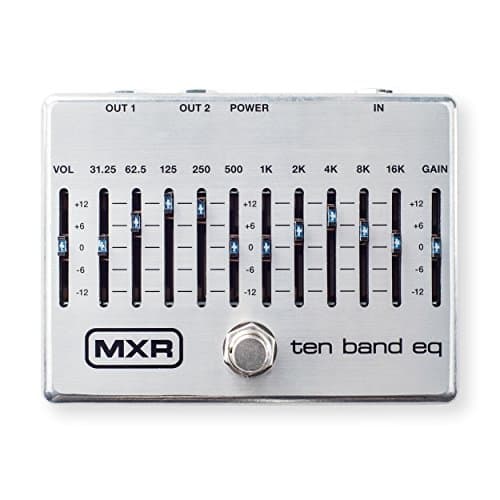
Best EQ Pedal pick: MXR 10 Band EQ
#ad How we’re funded · price as of September 13, 2026